01
Listen & place
We begin with goals, age, experience, and the music that makes you curious.
Private piano lessons · beginners to intermediate
Supportive one-to-one lessons for new players, returning adults, and growing musicians who want expressive technique, practical theory, and music that feels alive.
Meet your teacher
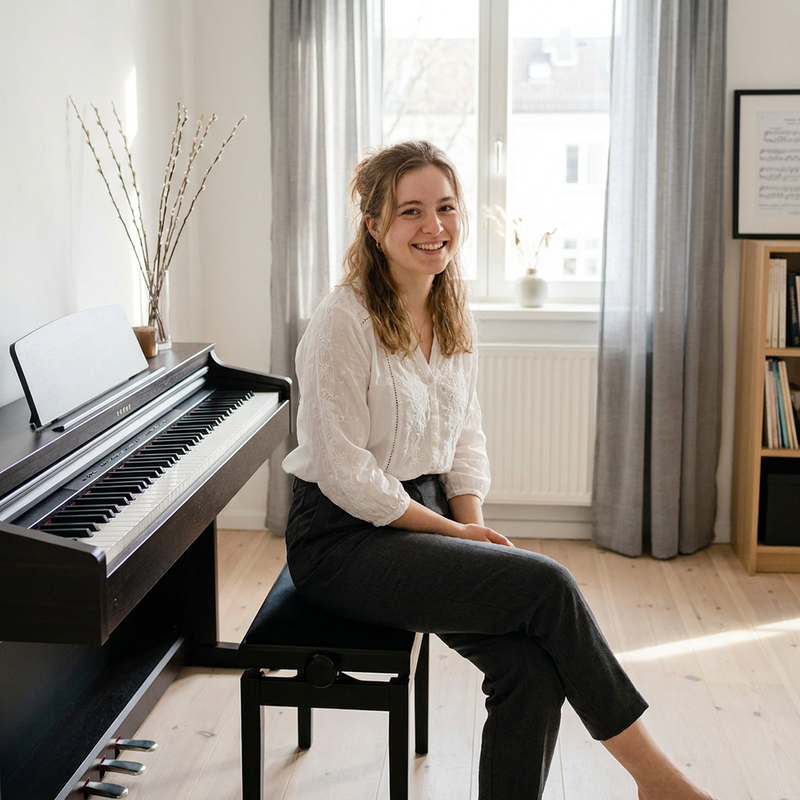
Nocturne Piano Studio is led by an independent teacher who blends classical foundations with practical encouragement. Lessons move step by step: posture, sound, rhythm, reading, theory, repertoire, and the confidence to share music with others.
30
minute starts
45
minute growth
60
minute depth
Lesson path infographic
01
We begin with goals, age, experience, and the music that makes you curious.
02
Rhythm, note reading, technique, ear training, and simple theory become weekly habits.
03
Pieces are chosen for confidence, musicality, recital preparation, and personal joy.
04
Students learn practice routines, memory tools, and calm ways to share music.
Who lessons support
Gentle starts for children or teens learning keyboard geography, rhythm, reading, and healthy practice routines.
A welcoming reset for adults who once played, always wished they had, or want music as a mindful weekly ritual.
Deeper work on tone, technique, theory, phrasing, sight-reading, and more satisfying repertoire.
Performance coaching for confidence, memory, expressive detail, and calm stage presence.
Studio experience
Lessons feel focused, warm, and unhurried so students can ask questions and try again.
Scales, chords, intervals, and notation connect directly to the songs students are learning.
Students leave with clear weekly steps instead of vague instructions to “play more.”
Mini gallery
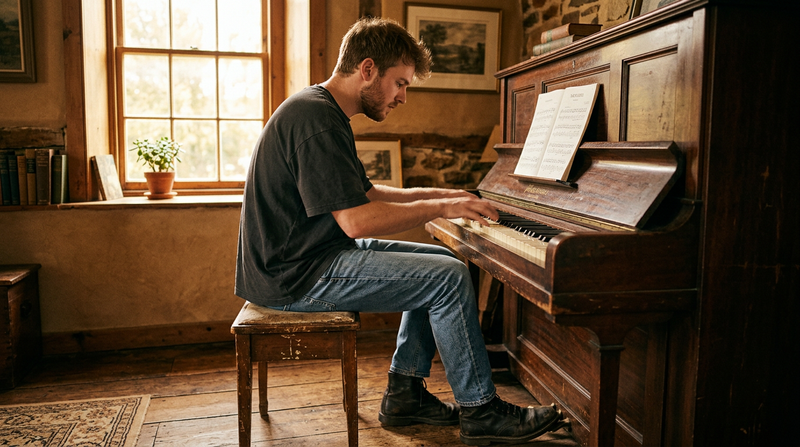
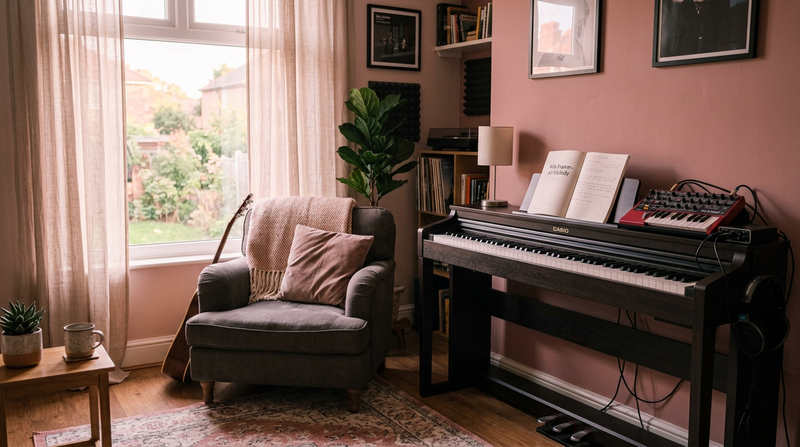
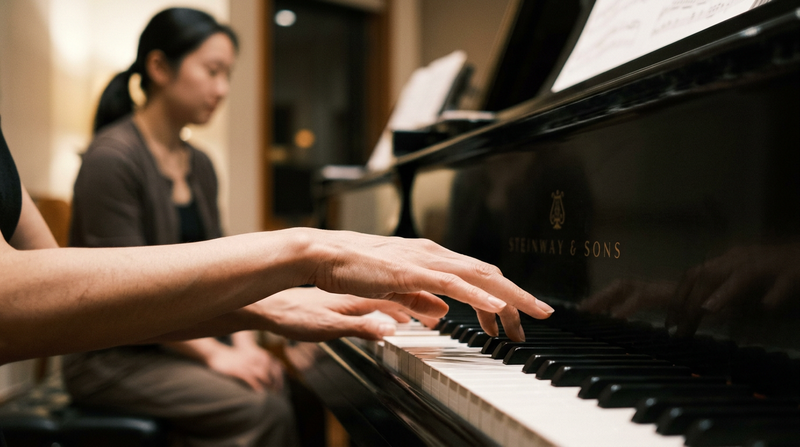
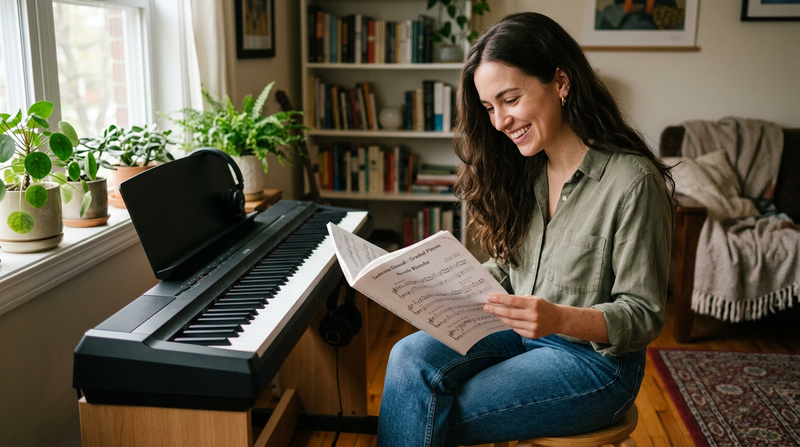
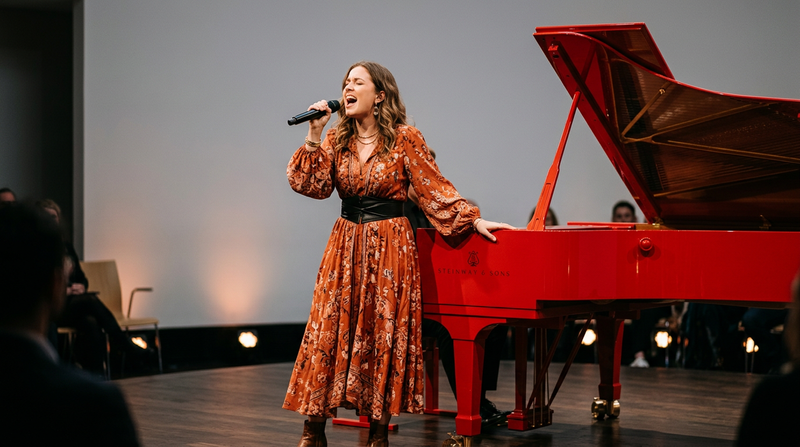
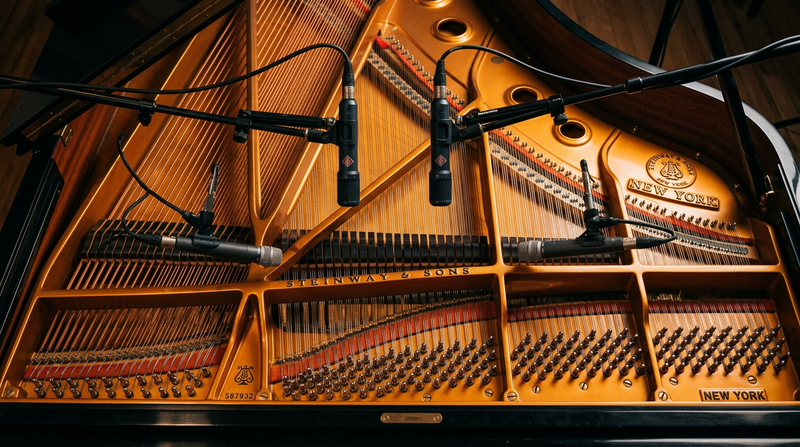
The studio environment is designed to feel composed and encouraging: a place to slow down, notice sound, and build musical fluency week by week.
Student voices
“I came back to piano after twenty years and felt nervous. The lessons are patient, musical, and surprisingly joyful.”
“My daughter understands rhythm so much better now, and she actually enjoys practicing between lessons.”
“Recital prep helped me feel calm and prepared instead of just hoping I would remember the piece.”
FAQ
Thirty minutes is a gentle start for young beginners. Forty-five minutes offers more room for technique and repertoire. Sixty minutes works well for adults, intermediate students, or recital preparation.
No. Some adults begin from the very first note, while others return after years away. Lessons are paced with patience and clear practice steps.
Yes. Theory is woven into repertoire so chords, rhythm, intervals, scales, and notation feel useful rather than abstract.
Students can work on recital preparation, memorization, interpretation, performance confidence, and strategies for steady nerves.
Submit the first lesson inquiry with age, experience level, and preferred lesson time. You will receive a thoughtful response about fit, pacing, and next steps.
Ready to begin softly?
Whether you are starting from silence or returning to a song you once loved, the first inquiry begins with listening.